COMPRESSED AIR TRAINING
CAGI’s training includes both the Foundations of Efficient Compressed Air Systems e-learning course and the full suite of Compressed Air Challenge (CAC) training programs. As the Education Foundation of CAGI, CAC provides nationally recognized, product-neutral training designed to improve compressed air system efficiency, reliability, and performance.
FOUNDATIONS OF EFFICIENT COMPRESSED AIR SYSTEMS
CAGI's elearning course is designed to provide an easy, efficient, and cost-effective method for sales and service professionals to learn the fundamentals of compressed air. The course consists of seven, updated modules that thoroughly cover the fundamentals of compressed air using informative narration supported by clear pictures, illustrations, and videos. Each module is subdivided into short, manageable chapters with chapter summaries at the end of each chapter.
This self-paced online program introduces the core principles of compressed air system efficiency and is an excellent starting point for individuals preparing to participate in the CAC's Fundamentals or Advanced training.
A recall test at the end of each module will verify that the student understands the content. Depending on the current knowledge of the student, the modules can be completed within four to eight hours.
CAC FUNDAMENTALS OF COMPRESSED AIR SYSTEMS (LEVEL 1)
The Fundamentals of Compressed Air Systems (Level 1) course is designed to teach facility engineers, operators and maintenance staff how to achieve 15-25% cost savings through more effective production and use of compressed air. Participants will learn how to:
This course is available in-person and virtually.
More Information To Host a Level 1 Course CalendarCAC ADVANCED MANAGEMENT OF COMPRESSED AIR SYSTEMS (LEVEL 2)
The Advanced Management of Compressed Air Systems (Level 2) course provides in-depth technical information on troubleshooting and making improvements to industrial compressed air systems. This training is designed to help end users as well as industry solution providers learn how to:
This course is available in-person and virtually.
More Information To Host a Level 2 Course Calendar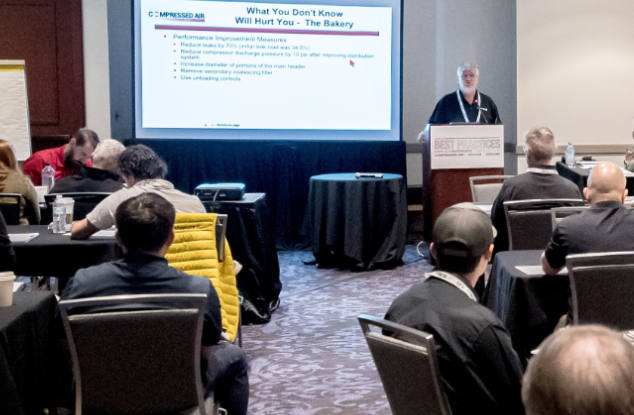
After completing this course, students will know and understand:
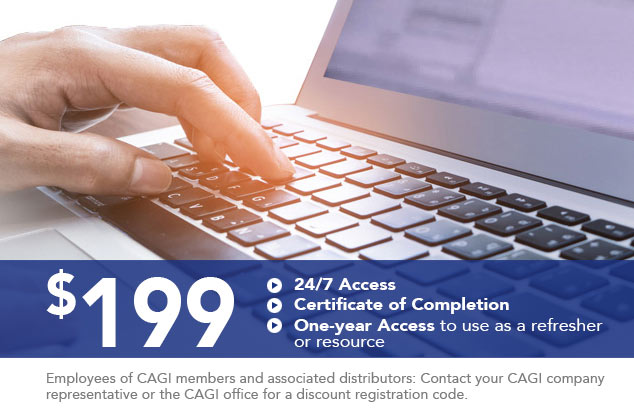
Students will be able to download a certificate of completion after completing and passing all seven modules. Students will have access to the course to use as a refresher or resource for a full year.
CAC Fundamentals and Advanced Management of Compressed Air Systems
Compressed Air & Gas Institute
1300 Sumner Avenue
Cleveland, OH 44115
Phone: 216/241-7333
Fax: 216/241-0105
©2026 CAGI